Students are protesting university divestment from Israel. What does that mean?
- Pro-Palestine student demonstrators are calling on their universities to cut ties with companies they believe are complicit in the current Israel-Gaza War.
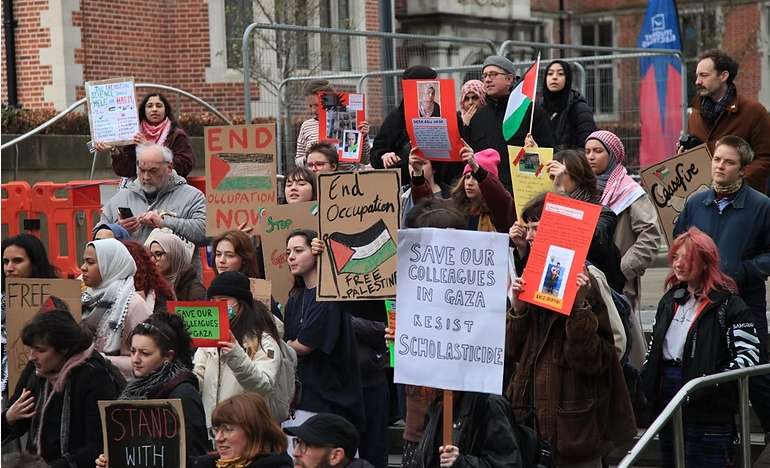
What is going on in Israel + Palestine?
On May 14 1948, the State of Israel was established, marking the end of British rule in Palestine. This is known as Nabka, which was the mass displacement and dispossession of 750,000+ Palestinians in preparation for the founding of Israel.
Today, Israel is divided into two states: Israel and the Palestinian territories known as the West Bank and the Gaza Strip.
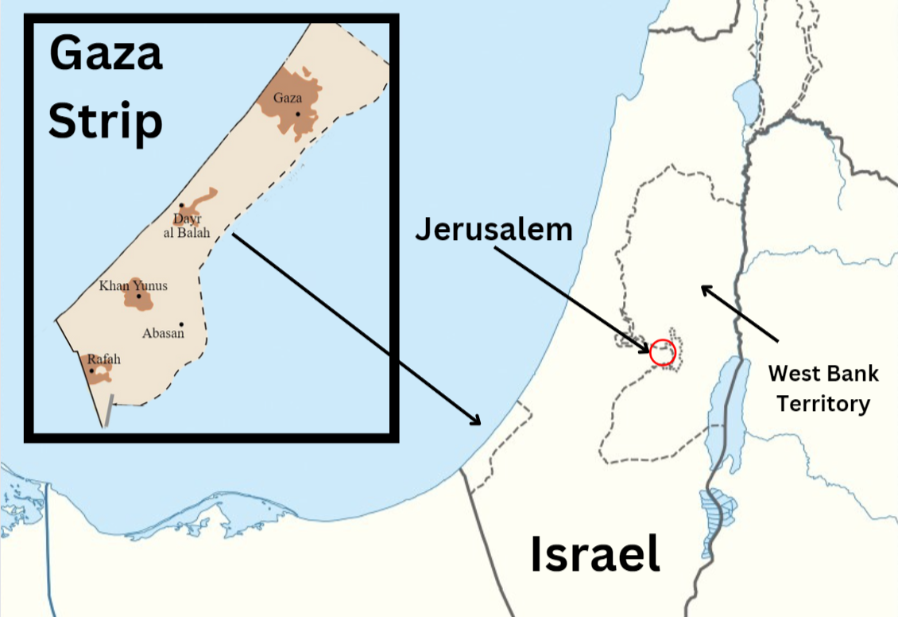
On October 7th 2023, the 'paramilitary-led' Palestinian group Hamas crossed the Gaza border into Israeli territory in an attack which led to 1,139 deaths and about 250 captives. In response, the Israeli military launched ongoing ground and air assaults on the Palestinian territories.
Read more on what happened on October 7th here:
According to Aljazeera, the latest statistics show 35,671 Palestinian deaths and 78,755 wounded, with 1,139 people killed and at least 8,730 in Israel, during the past 6 months.
(These figures are current as of 14th April 2024.)
The Palestinian Health Ministry have said more than 70% of the dead are women and children under 18. During this conflict it has been recorded over 40% of the dead are children.
The international media coverage have shocked the populations with the violence and mass loss of life and people are calling the UK Government to call for another ceasefire.
What is the connection between defence companies and the current conflict in Gaza?
According to Government documents of UK arms exports: statistics, the defence sector accounted for 68% of the total value of UK exports between 2018 to 2022, at a value of £12 billion. This was an increase of £4.6 billion from the year before.
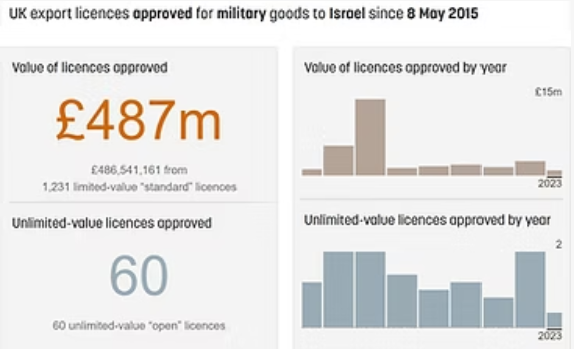
According to Caat, Britain supplies around 15% of the F-35 fighter aircraft, which is built in the US by Lockheed Martin and used by the Israeli military. This includes radar and targeting systems and jet re-fuselage components.
The organisation estimates that considering Britain’s share of the programme, the value of UK parts in the F-35s delivered to Israel has been worth '£336mn since 2016'.
The laws in the UK about selling and hiring contracts with defence companies outside the UK requires permissions from the Government.
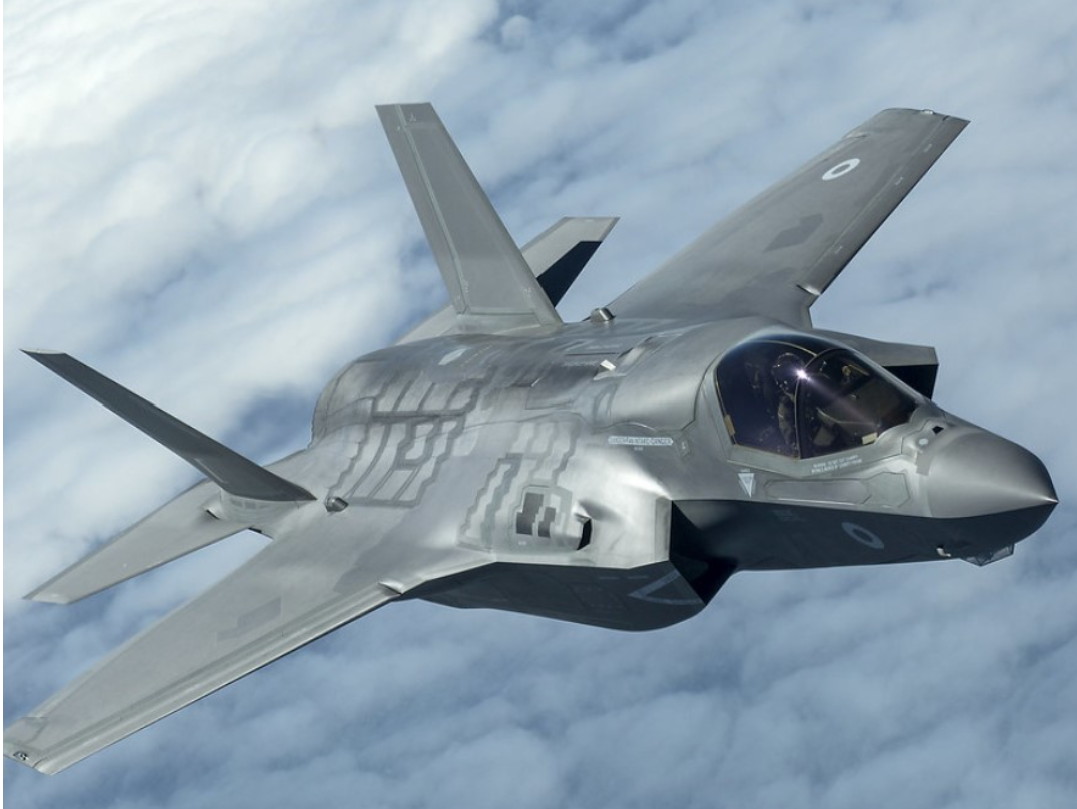
BAE Systems, which builds the rear fuselage section of the F-35 said it has “no operations or employees in Israel or Gaza, nor do we sell military equipment directly to Israel”. “We’re a partner on Lockheed Martin’s global F-35 programme, which includes Israel,” the company added.
On 18 December 2023, the Trade Secretary decided not to suspend existing export licences and equipment in relation to the conflict.
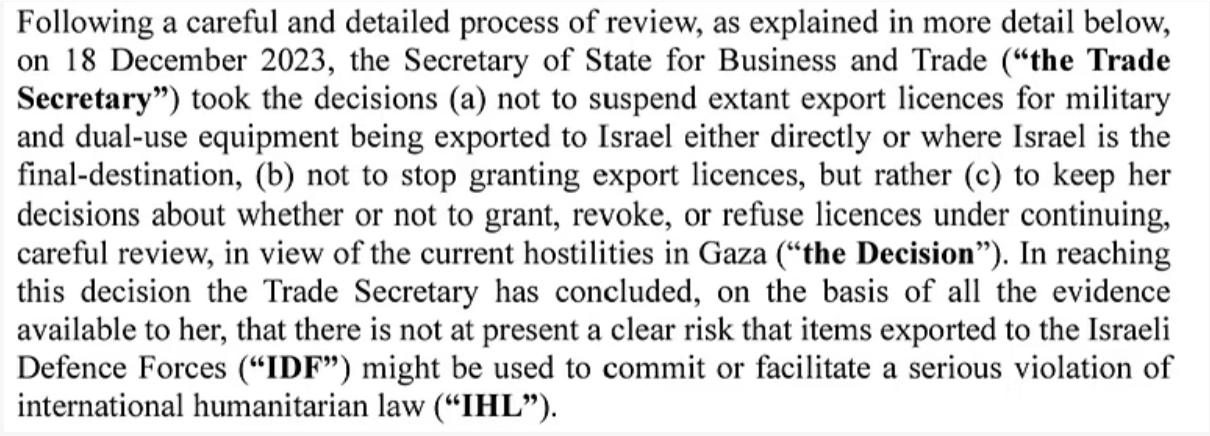
There has been no updated revisions made public since this date.
In an interview with the Financial Times, spokesperson for CAAT, said that ending UK arm exports would "send a clear message that the UK believes that Israel is breaching international humanitarian law which would put pressure both on the Israeli government, and also on the US regarding their own much larger exports".
What is the relationship between universities and the defence sector?
The defence sector is one of the biggest employers of research, development and manufacture in the UK, which is exported and sold to international companies only by government license.
Many aerospace and defence companies work alongside universities to support research and innovation of the sector. These companies not only research armaments but also look into other technologies such as space satellite communications.
In 2022, Lockheed Martin and Northumbria University announced a collaboration that included a £630,000 investment to support skills, research, and technology in the North East of the UK.
For a university to be a stakeholder in these companies, it could mean further investment in student resources, partnerships that offer opportunities for research and create jobs for post-graduates.
An engineering student has said: "I have been looking for jobs after graduation and all the available opportunities are for defence companies research and development. It seems to be where the most money is and the most ethical concerns".
Universities have previously worked with these companies offering graduate programmes, apprenticeships and innovative academic research.
Many universities have policies and legislation in place for ethical investments and research. For example, Newcastle University's 'Socially Responsible Investment Policy' states it does not "permit investment in [...] companies manufacturing armaments".
Some argue the future of the defence industry will rely on students to support the economy and public wellbeing against international aggressors.
What are the students protesting for? The connection between all three parties
According to student protesters, "the lack of transparency" that tuition fees could be going towards facilitating potentially harmful research of armaments that are involved in deaths in the middle-east, has raised concerns.

Tayab Ali, an international law solicitor from the ICJP, when talking about the Government's response to the university students demands said:
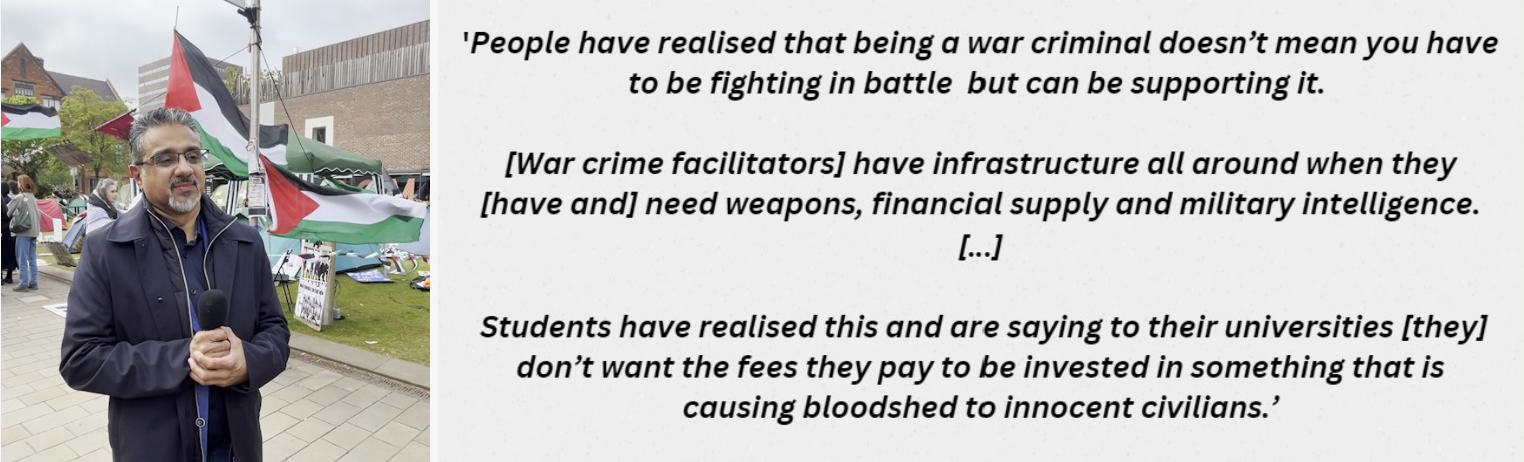
Chandni Chopra, Independent Councillor in the recent North East local elections said: "this is the most broadcasted genocide of this century and the university executive board should reconsider its affiliations".
A Newcastle University student said: "students shouldn’t only be protesting at the universities but towards the government because they have to get permission from the government who oversee the export licenses to countries with conflict and crises. They have more to answer for".
How might the universities respond?
Recently, Prime Minister Rishi Sunak held a meeting at No10 with the vice chancellors from UK Universities alongside the Chair of Russell Group Chris day, to discuss antisemitism on campuses. This is following aggressive police involvement in protests in the U.S and the growing number of encampments in the UK.
When asked what the PM’s message to students involved in the protests, his spokesperson said 'The right to free speech does not include the right to harass people or incite violence'. And following government guidance said ‘we expect university leaders to take robust action in dealing with that kind of behaviour’.
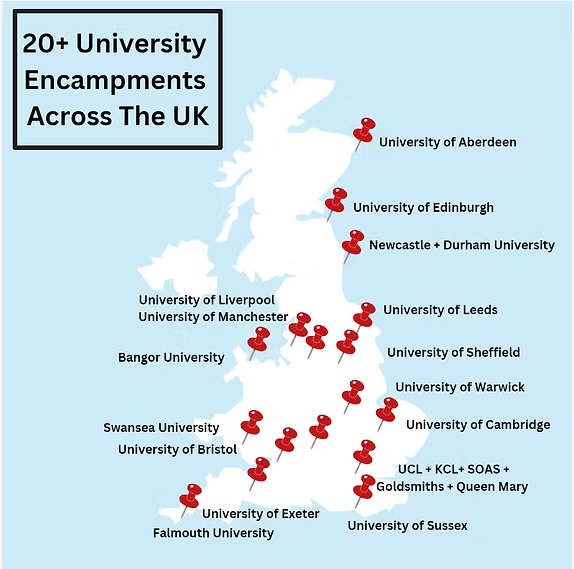
With the government advice about managing protests offered to university administrations, it is unclear how both parties are thinking of responding to the demand for divestment and call for ceasefire.
An engineering student who did not wish to be named said: "It will be interesting to see if Chris Day [The Vice Chancellor of Newcastle University] will meet with the protestors, but I do not believe the encampment could be around for much longer as the academic year nearly ends and students go home for the summer."
For Newcastle University students who have been affected by the conflict, visit the NUSU website for information on the support available to all students, or you can find help here:
- The Welfare and Support Centre pop in, call on 0191 2393909 or email wsc.union@ncl.ac.uk for an informal chat and for information on support services.
- Student Societies are one way to find support within communities of students who may also be feeling affected by events nationally and internationally. Here is a full A-Z of societies or alternatively contact the Activities Officer at activites.union@ncl.ac.uk.
- The Student Advice Centre can help with practical guidance on a range of issues such as finance and academic. Please contact 0191 2393979 or email Student-Advice-Centre@ncl.ac.uk if you would like to book an appointment.
Disclaimer:
The work presented here is part of a student project. While the information on this website has been verified to the best of our abilities, we cannot guarantee that there are no mistakes or errors.
The material on this site is given for general information only and does not constitute professional advice.
Post a comment